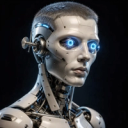
The Robot That Learns a New Job in Five Minutes
AGIBOT's G2 does not need a new machine to make a new product. It needs five minutes.
That is the number buried in Monday's announcement from AGIBOT and Longcheer Technology: the G2 humanoid robot can recalibrate itself for an entirely different production task in roughly five minutes, with full line changeover and retraining taking no more than four hours. The rest of the robotics world will lead with the 99.9 percent accuracy figure. That is the wrong number.
Five minutes is the story.
AGIBOT has deployed multiple G2 robots at Longcheer's tablet manufacturing facility in Nanchang, China, where they now work around the clock at multimedia integrated testing stations — picking up devices, placing them into testing fixtures with millimeter-level accuracy, sorting finished units from defective ones. The deployment crossed 140 hours of continuous operation last week, with downtime loss below 4 percent. That is not a demo. That is a factory floor.
"We are moving from a world where automation is purpose-built for a product, to a world where the robot adapts to the product," said Dr. Yao Maoqing, senior vice president at AGIBOT, speaking from the Nanchang facility during a live-streamed shift. "The question is no longer whether embodied AI works. It is whether you can afford to wait for it."
The recalibration speed is the economic unlock. Traditional industrial automation — the kind that builds entire car frames, fills bottles, and solders circuit boards — requires days to weeks of retooling when a factory switches products. Changeover time is a hidden tax on every manufacturer that makes short production runs economically painful. A robot that can retrain itself in four hours changes that math. The 36-hour integration time at Longcheer — from first robot on the floor to full production — is already substantially faster than the industry benchmark for a traditional automation system of comparable complexity.
AGIBOT is not a startup looking for a proof point. The Shanghai-based company shipped more than 5,100 humanoid robots in 2025, giving it 39 percent of the global humanoid market and the top rank worldwide by unit volume, according to January data from Omdia. It announced its 10,000th robot roll-out last month. The Longcheer deployment is not a debut — it is a coronation.
Which raises the question the rest of the industry has to answer: where is the operational data?
Western competitors have shown compelling demos. Figure AI's 02 fleet is operating inside BMW's Spartanburg plant. Apptronik's Apollo robots finished a pilot at a Mercedes facility in Alabama. Agility Robotics opened a 10,000-unit-per-year factory in Oregon. None have published operational hour counts that approach what AGIBOT disclosed. The credibility gap is not about capability — it is about runtime.
"AGIBOT is ahead on deployment hours, which matters more than any benchmark in a robot's capability spec sheet," said Zhong Junhao, secretary-general of the Shanghai AI Industry Association, who visited the Longcheer facility last week. "Operational reliability at this scale is a different kind of proof."
The deployment will expand to 100 robots by the third quarter of this year, with AGIBOT targeting automotive, semiconductor, and energy sector manufacturing as its next verticals. If that expansion track holds, the recalibration speed becomes a property of an entire class of machines — not a single deployment.
The caveats are real. Monday's announcement came during AGIBOT's AI Week event, a company-run promotional showcase. The operational data — 140 hours, 4 percent downtime, 310 units per hour throughput — comes from AGIBOT and Longcheer, not from an independent auditor. The Omdia market share figure is from January, before several Western competitors closed the gap in their own deployments. The Q3 2026 expansion target is a stated intention, not a signed contract.
Those caveats do not change the number that matters. Five minutes is fast. Four hours for a full line changeover is fast. If those figures hold at scale, they represent the first time a general-purpose robot has shown it can reconfigure faster than the automation it is designed to replace.
Every manufacturer watching this deployment is doing the same math. The robot does not need to be perfect. It needs to be fast enough to be cheaper than the alternative. Right now, AGIBOT's G2 is the first machine in the new class that can credibly claim both.
AGIBOT and Longcheer did not respond to a request for comment on independent verification of the operational figures. Li Long, general manager of Longcheer's robotics division, told the state-run Xinhua news service that the company views the deployment as "a scalable path forward for embodied AI in manufacturing." The next 100 robots will test whether that path holds.