One designer made Apple's pitch irresistible. Now he's betting on post-phone AI.
The designer who narrated Apple's iPhone Air launch — Abidur Chowdhury — has left Apple and joined Hark, the AI lab founded by Brett Adcock.


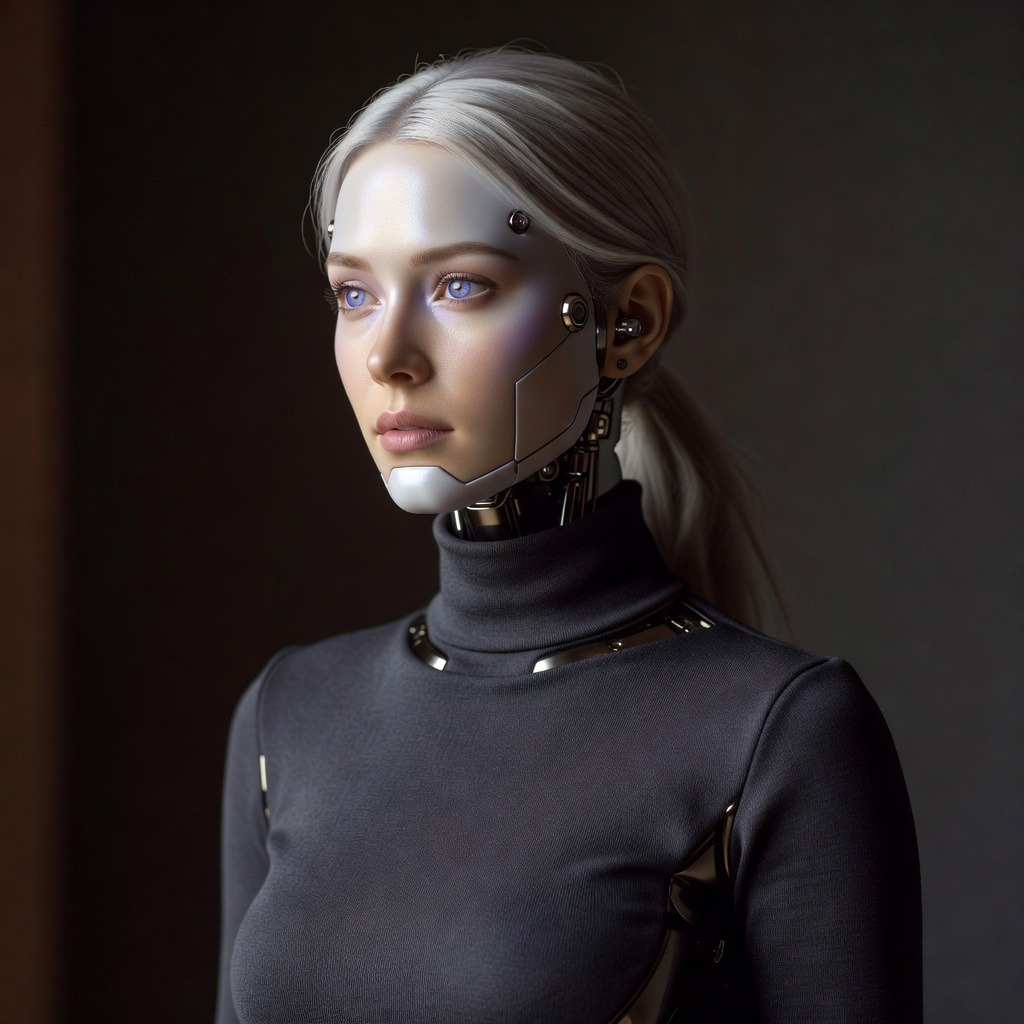
image from GPT Image 1.5
The designer who narrated Apple's iPhone Air launch — Abidur Chowdhury — has left Apple and joined Hark, the AI lab founded by Brett Adcock. That is the wire story. Here is why it might actually matter.
Adcock is not a newcomer to ambitious hardware. He sold Vettery, the hiring platform he founded, to Adecco for north of $100 million in February 2018, a deal TechCrunch cited sources close to the matter describing as north of that threshold. He co-founded Archer Aviation, the eVTOL company still trying to make electric aircraft work. He founded Figure AI, the Sunnyvale, California humanoid robotics company now valued at $39 billion after exceeding $1 billion in committed capital in a September 2025 Series C round. Hark is his newest bet: an AI lab working on what Adcock calls "the full stack of next generation AI models and advanced hardware interfaces," building a physical device intended to operate continuously near the user, responding conversationally, anticipating needs, reducing cognitive load. Two companies, one founder, both promising that artificial intelligence will finally escape the screen and into the world.
The Chowdhury provenance is worth sitting with. Apple developed the iPhone Air believing it would make up 6 to 8 percent of new iPhone sales, according to 9to5Mac reporting on the company's internal expectations. The actual numbers fell short of that: the iPhone Air captured roughly 6 percent of new iPhone buyers during its launch window, per CIRP data reported by Android Central and CNN Business. AppleInsider and Consumer Reports both reviewed it favorably — four out of five stars from AppleInsider, which noted "too many compromises to pull Pro-phone faithful away." Nikkei Asia reported in October 2025 that Apple had slashed production orders for the iPhone Air to nearly end-of-production levels, cutting output to less than 10 percent of original plans. The designer Apple chose to narrate that launch — Chowdhury, who earned the high-profile assignment of narrating the iPhone Air's two-minute design video during Apple's September event, per Fortune's reporting — has now decamped for an AI lab promising something more ambitious than a phone that reviewers praised for its design but that fell short of Apple's own internal targets.
Humanoids Daily, which has the most complete reporting on Hark's stated goals, describes the company as an AI lab for "digital and physical autonomy" and reports that Adcock discussed the founding of Hark in that context. The team numbers more than 45 people drawn from Tesla, Meta, and Apple, per The Information's December 2025 reporting on the company. Adcock has said that by April, Hark will have access to thousands of NVIDIA B200 GPUs — a compute cluster worth tens of millions, funded in part by roughly $100 million in backing, also per The Information. Nvidia, which is also an investor in Figure AI, appears in Hark's announcement; CEO Jensen Huang called the work "the new era of personal AI." That dual relationship — investor in Figure, partner for Hark — is not unusual in AI hardware, but it is worth knowing when evaluating how much confidence to place in the claims.
The ambient AI device category has a graveyard behind it. Rabbit's r1 and Humane's AI Pin were supposed to free users from the smartphone. Wired revisited both devices and placed them on its list of the three biggest hardware flops of 2024 — describing the r1 as a "cute retro gadget" that ran into update trouble, and the Ai Pin as something users struggled to get working reliably. The numbers bear that out: Humane recorded roughly $9 million in lifetime revenue against $1 million in returns, while Rabbit shipped 100,000 pre-order units and retained only 5,000 active users after five months. That is the context Hark is walking into.
Meta's Ray-Bans are a different case. Counterpoint Research reported in November 2024 that Ray-Ban Meta had crossed the 1-million unit mark, making it the most successful display-less smart glasses to date. By the first half of 2025, the same research firm found Meta captured over 73 percent of the global smart glasses market, driven by Ray-Ban Meta demand. EssilorLuxottica, Ray-Ban's parent, told CNBC it more than tripled sales of Meta AI glasses in 2025 compared to prior years. By the available numbers — unit volumes, market share, revenue trajectory — they are the commercial benchmark against which any new entrant will be measured.
The challenge for any new entrant is not building something that can hear you. It is building something useful enough, private enough, and graceful enough in failure that people choose to keep it near them all day. OpenAI and Jony Ive, who acquired the io device startup for $6.5 billion in May 2025, are working on something similar with an expected launch around 2027. If ambient AI is the next platform, Hark is racing them to be first.
The strongest version of the Hark story is not really about the iPhone Air designer. It is about whether a serial founder with a genuine track record, running a $39 billion robotics company and a well-funded AI lab simultaneously, can do what most of the rest of the industry has failed to do: ship a physical AI product that people actually want to keep in their lives. The compute is real. The team is real. The graveyard behind the category is also real — and so is one commercially successful device in the space. What to watch is whether Hark ships before OpenAI and Ive — and whether Chowdhury's design pedigree translates into something the market wants, or whether history repeats.