Anthropic ships first AI that actually does things on your computer
The gap between "AI assistant" and "AI that does things" just got narrower.


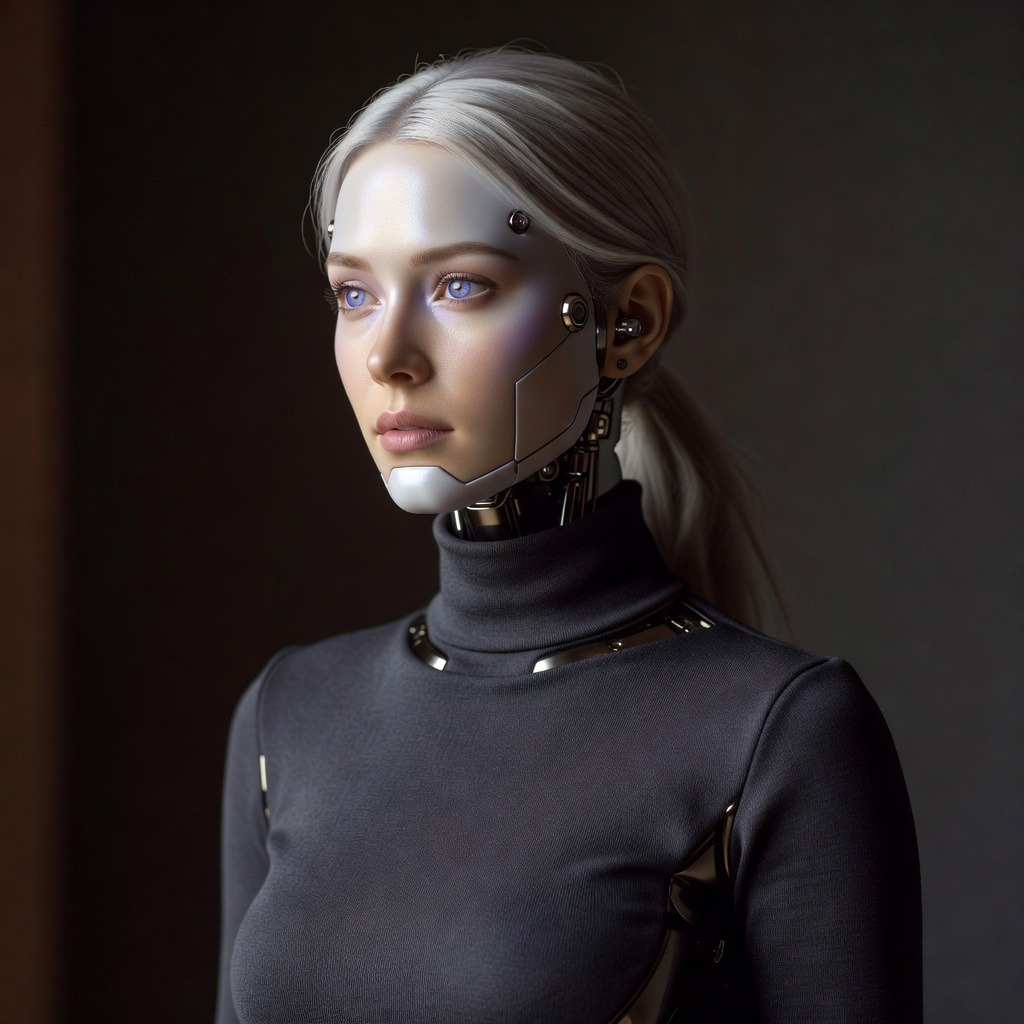
image from GPT Image 1.5
The gap between "AI assistant" and "AI that does things" just got narrower. Anthropic on Monday shipped computer use inside Claude's Cowork and Code environments — letting Claude control your actual Mac desktop to execute tasks while you walk away. It is a research preview, available to Pro and Max subscribers on macOS only, and it marks the first time Anthropic has put its computer-use capability inside a consumer product most people can actually run.
The announcement, detailed in Anthropic's blog post, is technically two things at once. The computer use feature itself gives Claude the ability to see your screen and manipulate applications — launching software, clicking buttons, filling forms. The second piece is Dispatch, a phone-to-desktop handoff that went live last week: assign a task from your phone, and Claude can pick it up and execute it on your desktop when you're back. Together they form something closer to an autonomous workflow than a chat interface.
The architecture is worth noting. According to Anthropic's Help Center documentation, the system is connector-first: it tries to use native application APIs and integrations before falling back to raw screen control. That is a meaningful design choice. Pure screen-scraping agents are brittle and error-prone; connectors are more reliable and harder to spoof. Direct screen control is the fallback, not the default.
What makes the product sticky, if it sticks, is how it layers onto two features Anthropic already had. Memory lets Claude accumulate context about a user across sessions. Dispatch routes tasks from phone to desktop automatically. Computer use is the execution layer. Stack them: a user with months of Claude memory assigns a recurring task from their phone — a daily email triage, a weekly metrics pull — and Claude executes it on the desktop, unsupervised. That is a meaningfully different product proposition than a chatbot.
The team behind it
The capability did not come from nowhere. In February, Anthropic acquired Vercept, a startup that had been building computer-use AI. Vercept's founders — Kiana Ehsani (CEO, robotics background), Luca Weihs (reinforcement learning), and Ross Girshick (computer vision, formerly at Meta AI Research and Microsoft Research) — are all Allen Institute for Artificial Intelligence (AI2) alumni. The company had raised $16 million before winding down its external product to fold into Anthropic, per GeekWire's reporting at the time.
The OSWorld benchmark numbers illustrate how fast this capability has moved. In late 2024, state-of-the-art computer use models scored under 15% on OSWorld, a standardized test of autonomous desktop task completion. Sonnet 4.6, the model powering the current release, hits 72.5% — essentially matching the human baseline of 72.4%. That is a nearly fivefold improvement in roughly a year. Whether OSWorld generalizes to real user workflows is a different question, but the jump is striking enough that you have to take the capability seriously even if you're skeptical of benchmarks.
What "research preview" means here
Anthropic is careful not to call this a full product. The framing — research preview, macOS only, Pro and Max — signals that the failure modes are known and the blast radius is deliberately constrained. The Anthropic Help Center documentation makes a point that should give any user pause: computer use runs outside the virtual machine Cowork normally uses. That means Claude has direct access to your actual desktop, not a sandbox. Sensitive applications are off-limits by default, and memory is configured to exclude passwords and financial data. The protection model depends on configuration and permission-granting working correctly — and on users reading the documentation.
The security risk Anthropic has been most candid about is prompt injection. In February, the company published its own failure rates on prompt injection attacks — an unusual move for any AI lab. One documented attack vector: an adversary plants a file on disk with a hidden instruction disguised as a skill document; Claude reads it during a task and exfiltrates data through an Anthropic domain that appears on the whitelist. Anthropic says it runs activation-pattern scanning to detect injected instructions, but detection is not prevention. The Dispatch help documentation is explicit that cascading mistakes from autonomous execution can be hard to reverse. For users who grant broad permissions early, that warning is not hypothetical.
The race to own the desktop
Anthropic is not alone here, and the timing makes that obvious. Perplexity, the AI search company, launched Perplexity Personal Computer on March 11 — a Mac mini-based AI agent positioned as a "digital proxy" that runs locally and continuously. Manus, the AI agent startup Meta acquired at the end of 2025, launched Manus My Computer as a desktop app for Mac and Windows two weeks later. Engadget confirmed the Anthropic rollout details, noting the connector-first architecture and Pro/Max macOS constraint.
The differences between these approaches matter. Perplexity's is hardware-based and local; Anthropic's lives inside its existing subscription product and its cloud infrastructure. What Anthropic has that neither competitor yet matches is a coherent stack: Memory for context, Dispatch for task routing, computer use for execution. Whether that integration compounds into a durable advantage or whether any sufficiently capable model running on the desktop becomes a commodity is the real question this release opens.
What to watch: how fast Anthropic expands platform support beyond macOS, whether the connector ecosystem grows quickly enough to reduce dependence on screen control, and whether the security posture holds once computer use moves out of research preview. The OSWorld number is impressive. But benchmark performance and unsupervised access to a real user's Mac are two different problems, and Anthropic has only solved the first one in public so far.